
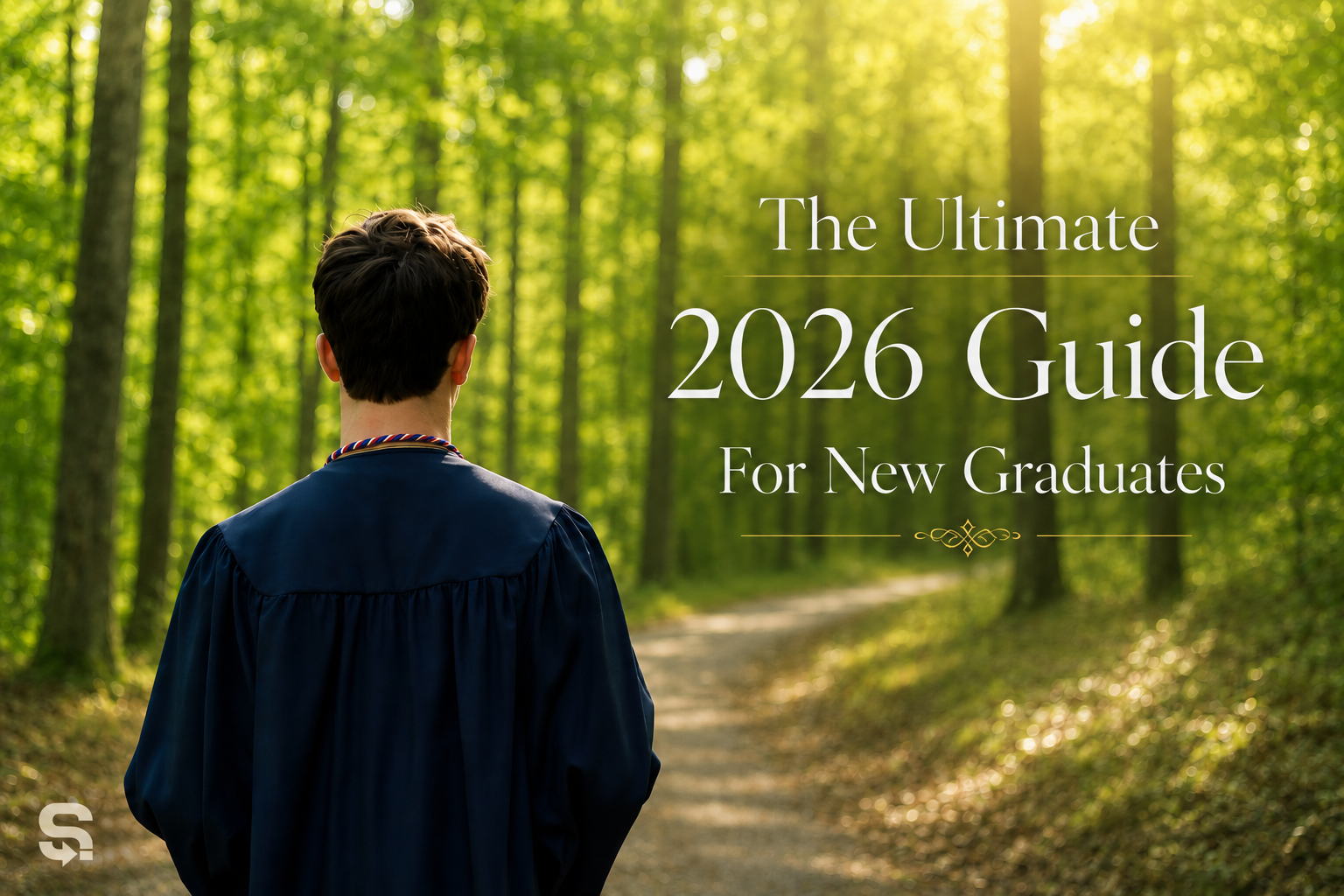
Your First Career Might Not Be a Job: The 2026 Graduate Playbook for Building Skills, Income, and Ownership.
For decades, the graduate story was simple.
You finished university. You prepared a CV. You applied for junior roles. You waited for someone to call you. If you were lucky, a company opened the door and gave you your first real chance.
That story has not disappeared, but it has become less reliable.
In 2026, many graduates are entering a job market that feels strangely contradictory. Companies say they need talent, but junior roles ask for experience. Everyone talks about the future of work, but many young people cannot even get a first interview. AI is creating new opportunities, but it is also changing what employers expect from beginners. A task that once justified a junior hire can now be done faster with software, templates, or automation.
This does not mean young people have no future. It means the old waiting game is becoming dangerous.
The smartest graduates in 2026 are not only asking, “Who will hire me?”
They are asking, “What can I build, sell, improve, automate, design, write, manage, or explain before anyone gives me permission?”
That is where freelancing becomes important.
Freelancing is not just a lifestyle choice for digital nomads. It is not only about working from beaches or escaping offices. For a new graduate, freelancing can be a practical bridge between education and experience. It can help you discover what you are good at, build proof, earn income, meet clients, and understand how real businesses think.
But there is one rule you must understand early: freelancing is not about listing skills. It is about packaging value.
A client does not pay because you “know social media.” A client pays because you can help them look credible, attract leads, save time, explain their product, sell more, or operate better.
In 2026, the graduate who wins is not necessarily the one with the longest CV. It is the one who can turn a skill into a clear offer.
The Problem With “Entry-Level” in 2026
Many graduates feel stuck because the first step has become harder to access.
Entry-level roles often do not feel entry-level anymore. A job title may say “junior,” but the description asks for tools, experience, portfolio links, industry knowledge, communication skills, and sometimes years of previous work. This creates a frustrating loop: you need experience to get the job, but you need the job to get experience.
Freelancing breaks that loop.
You do not need to wait for a company to validate you before you start building proof. You can create sample projects. You can help small businesses. You can offer a narrow service. You can publish your work. You can create case studies. You can show your thinking.
This does not make freelancing easy. It simply gives you movement.
And movement matters.
A graduate who spends six months only applying for jobs may end that period with frustration and no visible proof. A graduate who spends six months learning one skill, building five sample projects, contacting small businesses, and completing even two paid assignments will have something more powerful than hope: evidence.
The New Graduate Skill Stack
In 2026, it is not enough to learn one random tool. Tools change. Platforms change. Algorithms change. The better strategy is to build a skill stack.
A skill stack is a combination of abilities that work together.
The strongest beginner stack has four layers:
A production skill.
An AI layer.
A communication layer.
A commercial layer.
Your production skill is the thing you can actually make or do. It might be editing videos, designing websites, writing copy, building automations, managing communities, creating dashboards, organizing operations, or researching a market.
Your AI layer helps you move faster. It helps you brainstorm, draft, analyze, summarize, prototype, repurpose, and test ideas.
Your communication layer helps you understand clients, ask better questions, explain your work, manage expectations, and build trust.
Your commercial layer helps you price, package, sell, negotiate, and position your service.
Most beginners only focus on the first layer. They learn the tool, but not the business around the tool. That is why many talented people struggle to earn. They can do the work, but they cannot explain why the work matters.
In 2026, the difference between a hobbyist and a freelancer is not talent. It is packaging.
AI Will Not Replace You If You Know Where Human Judgment Matters
AI has made average output cheap.
Average blog posts, average captions, average logos, average code snippets, average summaries, average slide decks, and average templates are everywhere. That is the uncomfortable truth.
But AI has not made taste, judgment, responsibility, context, empathy, strategy, and trust cheap.
This is where new freelancers must pay attention. Do not build your identity around being a person who “uses AI.” That is too weak. Build your identity around being someone who uses AI to create better outcomes.
A client does not want an AI-generated mess. A client wants clarity.
They want the right message for the right audience. They want a website that feels trustworthy. They want videos that people actually watch. They want automations that do not break. They want reports that lead to decisions. They want content that sounds like their brand, not like a generic machine.
AI can help you produce more, but you must still know what good looks like.
That is why the best freelancers in 2026 will not be anti-AI or blindly pro-AI. They will be AI-literate professionals with strong human judgment.
Use AI for speed. Use your mind for direction.
The Most Practical Freelance Paths for Graduates
There are hundreds of possible freelance services, but some are especially practical for new graduates because they are learnable, visible, and connected to real business needs.
One strong path is short-form video production. Businesses, founders, creators, coaches, educators, and startups all need video. They need clips, subtitles, hooks, structure, pacing, and repurposing. You do not need to become a Hollywood editor. You need to understand attention, clarity, and platform culture.
Another path is no-code website and landing page design. Many small businesses still have weak digital presence. A simple, clean, fast, mobile-friendly page can be valuable. If you can help a consultant, clinic, local business, coach, or creator look professional online, you have a service.
AI automation is another growing area. Small teams lose hours on repetitive work. Client intake, email replies, lead tracking, meeting summaries, reports, content calendars, and task management can often be improved with tools like Zapier, Make, Notion, Airtable, n8n, or built-in AI features. You do not need to automate an entire company. Start by saving someone five hours a week.
Copywriting and email marketing also remain useful. Not because the world needs more generic words, but because businesses need clearer communication. A good freelancer can turn confusion into simple language. That is valuable.
Social media strategy is another option, but only if you move beyond “posting content.” Real social media work involves positioning, audience understanding, content pillars, hooks, distribution, community interaction, and consistency.
Data reporting is underrated. Many small businesses collect information but do not understand it. If you can create clean dashboards, monthly reports, or decision-friendly summaries, you can become useful quickly.
Presentation design and research support are also excellent for graduates. Founders, consultants, students, executives, and educators often need ideas turned into clear slides, reports, or structured documents.
Finally, there is expertise-based freelancing. This is where your degree can still matter. A psychology graduate can help with mental health content, research summaries, or educational materials. A business graduate can create market research, pitch decks, or competitor analysis. A language graduate can help with localization and cross-cultural communication. A finance graduate can build budgeting sheets, simple dashboards, or investor materials.
Your degree may not automatically get you a job. But it can give you raw material for a service.
How to Know Which Skill Fits You
Many young people ask, “Which skill should I learn?”
A better question is, “Which type of problem do I naturally enjoy solving?”
Some people like making things look better. They notice spacing, color, style, visuals, and mood. These people may enjoy design, video, branding, or presentation work.
Some people like making things work better. They enjoy systems, tools, processes, and automation. These people may enjoy operations, no-code building, workflow design, or technical support.
Some people like making things sound better. They are sensitive to words, tone, structure, and persuasion. These people may enjoy copywriting, content strategy, editing, or storytelling.
Some people like making things clearer. They enjoy research, analysis, summaries, teaching, and organizing information. These people may enjoy reports, dashboards, educational content, or consulting support.
Some people like making things grow. They are interested in attention, sales, communities, outreach, and human behavior. These people may enjoy marketing, lead generation, community management, or partnerships.
Your first choice does not need to be permanent. In fact, it probably will not be. The goal is not to discover your destiny in one afternoon. The goal is to run small tests.
Choose three possible skills. Spend two weeks exploring each. Build something small. Notice your energy. Notice your frustration. Notice what you return to without forcing yourself.
The skill that fits you is not always the easiest one. It is the one you are willing to improve even when it becomes uncomfortable.
Build Proof Before You Ask for Trust
The internet is full of people claiming they can do things. Clients have become cautious because they have seen too many vague profiles and weak promises.
That is why proof matters.
Proof can be a portfolio, a case study, a before-and-after example, a short audit, a public breakdown, a sample project, a testimonial, or a recorded demo.
If you have no clients yet, create your own proof.
Redesign a bad landing page.
Create a 30-day content plan for a real brand.
Build a sample automation for a fictional client intake process.
Rewrite a confusing product page.
Turn a long podcast into five short video concepts.
Create a dashboard from public data.
Analyze a local business and suggest improvements.
Do not present these as fake client work. Present them honestly as sample projects. That is enough. The goal is to show how you think.
A strong beginner portfolio does not need 30 projects. Three thoughtful projects are better than 20 random pieces.
Each project should answer four questions:
What was the problem?
What did you create?
Why did you make those decisions?
What result would this help produce?
This turns your portfolio from a gallery into a trust-building tool.
Learn by Building, Not by Consuming Forever
Courses are useful. Tutorials are useful. Books are useful. But they can become a hiding place.
Many beginners keep learning because learning feels safer than selling. Watching another tutorial does not expose you to rejection. Building a real offer does.
But freelancing begins when your learning leaves your private screen and enters the market.
A practical learning system looks like this:
Learn the basics.
Build a small project.
Share it.
Get feedback.
Improve it.
Offer it.
Repeat.
Do not wait until you feel ready. Readiness often comes after contact with real problems, not before.
If you want to become a video editor, edit ten short clips and publish the best three.
If you want to build websites, redesign three landing pages.
If you want to become a copywriter, rewrite ten bad headlines and explain your choices.
If you want to work in automation, build three workflows and record demos.
If you want to do research, publish clear market summaries.
The market does not reward what you studied quietly. It rewards what you can make visible.
A 90-Day Plan for a Graduate Who Wants to Start
The first month should be discovery.
Pick three skill areas and test them. Do not overthink. Spend enough time to feel the work. Try video editing, automation, copywriting, design, dashboards, web design, or any area that attracts you. Watch tutorials, study examples, use AI tools, and build tiny exercises.
By the end of the first month, eliminate at least one option.
The second month should be proof-building.
Choose one or two skills and create sample projects. Make them specific. Specificity makes you look more professional.
Do not create “a website.” Create “a landing page for a local Pilates studio.”
Do not create “social media content.” Create “a two-week content system for a new skincare brand.”
Do not create “an automation.” Create “a client onboarding workflow for a freelance consultant.”
The third month should be outreach.
Pick one audience and send useful, personalized messages. Not spam. Not desperate messages. Helpful observations.
For example:
“I noticed your website has strong services, but the booking path is not very clear on mobile. I created a quick improvement idea that could make it easier for visitors to contact you.”
Or:
“I saw that your podcast episodes are long and valuable. I can turn one episode into five short clips with hooks and captions so you can test them on social platforms.”
Or:
“I noticed your store sends a lot of people to product pages, but the descriptions are very short. I can rewrite three product pages to make them clearer and more conversion-focused.”
The first client often comes from a small, specific offer. Not from a perfect brand.
Where You Build Also Matters
Most new freelancers think only about what they sell. But in 2026, where you build your reputation also matters.
Traditional freelance platforms can still be useful. They have traffic, search, payment systems, and client demand. But they also come with problems: intense competition, downward pricing pressure, dependency on platform rules, limited ownership over your profile, and the feeling that every freelancer is replaceable.
That is why graduates should not think of platforms only as places to “get gigs.” They should think about distribution, ownership, and long-term reputation.
This is where newer marketplace models become interesting. Platforms like fam.work are worth exploring because they represent a different direction for independent workers: community-driven discovery, crypto-native payments, referral-based growth, custom profiles, and a stronger sense of ownership around your freelance identity.
The point is not that one platform will solve your career. It will not. No marketplace can replace skill, consistency, trust, and good work. But young freelancers should pay attention to platforms that let them build more than a temporary listing. In a world where online reputation is an asset, ownership matters.
Your goal should be to avoid becoming fully dependent on any single platform. Use marketplaces to get discovered, but also build your own presence, your own portfolio, your own audience, your own network, and your own direct client relationships.
A platform can be a door. It should not become your entire house.
The New Rules of Pricing
When you are new, it is tempting to be the cheapest person in the room. That can help you get early experience, but it is a weak long-term identity.
Cheap attracts price-sensitive clients. Price-sensitive clients often demand more, respect boundaries less, and compare you with everyone else.
A better approach is to create clear packages.
Instead of saying, “I charge per hour for design,” create a starter brand kit.
Instead of saying, “I can help with social media,” create a 30-day content strategy package.
Instead of saying, “I do automation,” create a client intake automation setup.
Packages help clients understand what they are buying. They also make your service feel more complete.
A simple package can include:
A clear outcome.
A fixed scope.
A timeline.
A deliverable list.
A revision limit.
A price.
This does not need to be complicated. Clarity itself is valuable.
The Skills Nobody Talks About Enough
Many graduates focus only on technical skills. But soft skills often decide whether clients return.
Reliability is a skill.
Asking good questions is a skill.
Writing clear messages is a skill.
Explaining your process is a skill.
Saying no politely is a skill.
Managing scope is a skill.
Following up is a skill.
Delivering on time is a skill.
Making the client feel safe is a skill.
These skills sound simple, but they are rare. Many clients have worked with freelancers who disappeared, missed deadlines, misunderstood instructions, or delivered messy files. If you are organized, honest, and clear, you are already ahead of many people.
Professionalism is not about being formal. It is about reducing uncertainty for the client.
The Real Opportunity for Graduates
The opportunity in 2026 is not that freelancing is easy. It is not.
You will face rejection. You will send messages that get ignored. You will underprice yourself at first. You will revise work. You will compare yourself to people who seem far ahead. You will feel lost sometimes.
But freelancing gives you something the traditional job market often withholds: a way to start before you are chosen.
You can choose a problem.
You can learn a skill.
You can create proof.
You can contact a client.
You can improve your offer.
You can build public work.
You can earn your first testimonial.
You can become useful in the open market.
This is not a fantasy. It is simply a different kind of career beginning.
The first step may be small. A $50 project. A free audit. A redesigned page. A short video edit. A simple dashboard. A testimonial from a local business. A post explaining what you learned.
But small proof compounds.
One project becomes a case study. One case study becomes a better pitch. One pitch becomes a client. One client becomes a referral. One referral becomes confidence.
Conclusion: Do Not Wait to Be Picked
The old graduate dream was built around being selected.
Selected by a company.
Selected by a recruiter.
Selected by a manager.
Selected by a system.
The new graduate strategy is built around becoming visible.
Visible through your work.
Visible through your thinking.
Visible through your offer.
Visible through your ability to solve real problems.
In 2026, your degree may still matter. Your CV may still matter. A full-time job may still be part of your path. But you should not let your entire future depend on someone else opening the first door.
Learn one useful skill. Add AI leverage. Build proof. Package the result. Test the market. Use platforms wisely. Explore new ownership-focused marketplaces like fam.work, but do not depend on any single platform. Build your own reputation wherever you go.
Your first career might not begin with a job title.
It might begin with a problem you learn how to solve.
And that may be the most important graduate lesson of all.Your First Career Might Not Be a Job: The 2026 Graduate Playbook for Building Skills, Income, and Ownership
For decades, the graduate story was simple.
You finished university. You prepared a CV. You applied for junior roles. You waited for someone to call you. If you were lucky, a company opened the door and gave you your first real chance.
That story has not disappeared, but it has become less reliable.
In 2026, many graduates are entering a job market that feels strangely contradictory. Companies say they need talent, but junior roles ask for experience. Everyone talks about the future of work, but many young people cannot even get a first interview. AI is creating new opportunities, but it is also changing what employers expect from beginners. A task that once justified a junior hire can now be done faster with software, templates, or automation.
This does not mean young people have no future. It means the old waiting game is becoming dangerous.
The smartest graduates in 2026 are not only asking, “Who will hire me?”
They are asking, “What can I build, sell, improve, automate, design, write, manage, or explain before anyone gives me permission?”
That is where freelancing becomes important.
Freelancing is not just a lifestyle choice for digital nomads. It is not only about working from beaches or escaping offices. For a new graduate, freelancing can be a practical bridge between education and experience. It can help you discover what you are good at, build proof, earn income, meet clients, and understand how real businesses think.
But there is one rule you must understand early: freelancing is not about listing skills. It is about packaging value.
A client does not pay because you “know social media.” A client pays because you can help them look credible, attract leads, save time, explain their product, sell more, or operate better.
In 2026, the graduate who wins is not necessarily the one with the longest CV. It is the one who can turn a skill into a clear offer.
The Problem With “Entry-Level” in 2026
Many graduates feel stuck because the first step has become harder to access.
Entry-level roles often do not feel entry-level anymore. A job title may say “junior,” but the description asks for tools, experience, portfolio links, industry knowledge, communication skills, and sometimes years of previous work. This creates a frustrating loop: you need experience to get the job, but you need the job to get experience.
Freelancing breaks that loop.
You do not need to wait for a company to validate you before you start building proof. You can create sample projects. You can help small businesses. You can offer a narrow service. You can publish your work. You can create case studies. You can show your thinking.
This does not make freelancing easy. It simply gives you movement.
And movement matters.
A graduate who spends six months only applying for jobs may end that period with frustration and no visible proof. A graduate who spends six months learning one skill, building five sample projects, contacting small businesses, and completing even two paid assignments will have something more powerful than hope: evidence.
The New Graduate Skill Stack
In 2026, it is not enough to learn one random tool. Tools change. Platforms change. Algorithms change. The better strategy is to build a skill stack.
A skill stack is a combination of abilities that work together.
The strongest beginner stack has four layers:
A production skill.
An AI layer.
A communication layer.
A commercial layer.
Your production skill is the thing you can actually make or do. It might be editing videos, designing websites, writing copy, building automations, managing communities, creating dashboards, organizing operations, or researching a market.
Your AI layer helps you move faster. It helps you brainstorm, draft, analyze, summarize, prototype, repurpose, and test ideas.
Your communication layer helps you understand clients, ask better questions, explain your work, manage expectations, and build trust.
Your commercial layer helps you price, package, sell, negotiate, and position your service.
Most beginners only focus on the first layer. They learn the tool, but not the business around the tool. That is why many talented people struggle to earn. They can do the work, but they cannot explain why the work matters.
In 2026, the difference between a hobbyist and a freelancer is not talent. It is packaging.
AI Will Not Replace You If You Know Where Human Judgment Matters
AI has made average output cheap.
Average blog posts, average captions, average logos, average code snippets, average summaries, average slide decks, and average templates are everywhere. That is the uncomfortable truth.
But AI has not made taste, judgment, responsibility, context, empathy, strategy, and trust cheap.
This is where new freelancers must pay attention. Do not build your identity around being a person who “uses AI.” That is too weak. Build your identity around being someone who uses AI to create better outcomes.
A client does not want an AI-generated mess. A client wants clarity.
They want the right message for the right audience. They want a website that feels trustworthy. They want videos that people actually watch. They want automations that do not break. They want reports that lead to decisions. They want content that sounds like their brand, not like a generic machine.
AI can help you produce more, but you must still know what good looks like.
That is why the best freelancers in 2026 will not be anti-AI or blindly pro-AI. They will be AI-literate professionals with strong human judgment.
Use AI for speed. Use your mind for direction.
The Most Practical Freelance Paths for Graduates
There are hundreds of possible freelance services, but some are especially practical for new graduates because they are learnable, visible, and connected to real business needs.
One strong path is short-form video production. Businesses, founders, creators, coaches, educators, and startups all need video. They need clips, subtitles, hooks, structure, pacing, and repurposing. You do not need to become a Hollywood editor. You need to understand attention, clarity, and platform culture.
Another path is no-code website and landing page design. Many small businesses still have weak digital presence. A simple, clean, fast, mobile-friendly page can be valuable. If you can help a consultant, clinic, local business, coach, or creator look professional online, you have a service.
AI automation is another growing area. Small teams lose hours on repetitive work. Client intake, email replies, lead tracking, meeting summaries, reports, content calendars, and task management can often be improved with tools like Zapier, Make, Notion, Airtable, n8n, or built-in AI features. You do not need to automate an entire company. Start by saving someone five hours a week.
Copywriting and email marketing also remain useful. Not because the world needs more generic words, but because businesses need clearer communication. A good freelancer can turn confusion into simple language. That is valuable.
Social media strategy is another option, but only if you move beyond “posting content.” Real social media work involves positioning, audience understanding, content pillars, hooks, distribution, community interaction, and consistency.
Data reporting is underrated. Many small businesses collect information but do not understand it. If you can create clean dashboards, monthly reports, or decision-friendly summaries, you can become useful quickly.
Presentation design and research support are also excellent for graduates. Founders, consultants, students, executives, and educators often need ideas turned into clear slides, reports, or structured documents.
Finally, there is expertise-based freelancing. This is where your degree can still matter. A psychology graduate can help with mental health content, research summaries, or educational materials. A business graduate can create market research, pitch decks, or competitor analysis. A language graduate can help with localization and cross-cultural communication. A finance graduate can build budgeting sheets, simple dashboards, or investor materials.
Your degree may not automatically get you a job. But it can give you raw material for a service.
How to Know Which Skill Fits You
Many young people ask, “Which skill should I learn?”
A better question is, “Which type of problem do I naturally enjoy solving?”
Some people like making things look better. They notice spacing, color, style, visuals, and mood. These people may enjoy design, video, branding, or presentation work.
Some people like making things work better. They enjoy systems, tools, processes, and automation. These people may enjoy operations, no-code building, workflow design, or technical support.
Some people like making things sound better. They are sensitive to words, tone, structure, and persuasion. These people may enjoy copywriting, content strategy, editing, or storytelling.
Some people like making things clearer. They enjoy research, analysis, summaries, teaching, and organizing information. These people may enjoy reports, dashboards, educational content, or consulting support.
Some people like making things grow. They are interested in attention, sales, communities, outreach, and human behavior. These people may enjoy marketing, lead generation, community management, or partnerships.
Your first choice does not need to be permanent. In fact, it probably will not be. The goal is not to discover your destiny in one afternoon. The goal is to run small tests.
Choose three possible skills. Spend two weeks exploring each. Build something small. Notice your energy. Notice your frustration. Notice what you return to without forcing yourself.
The skill that fits you is not always the easiest one. It is the one you are willing to improve even when it becomes uncomfortable.
Build Proof Before You Ask for Trust
The internet is full of people claiming they can do things. Clients have become cautious because they have seen too many vague profiles and weak promises.
That is why proof matters.
Proof can be a portfolio, a case study, a before-and-after example, a short audit, a public breakdown, a sample project, a testimonial, or a recorded demo.
If you have no clients yet, create your own proof.
Redesign a bad landing page.
Create a 30-day content plan for a real brand.
Build a sample automation for a fictional client intake process.
Rewrite a confusing product page.
Turn a long podcast into five short video concepts.
Create a dashboard from public data.
Analyze a local business and suggest improvements.
Do not present these as fake client work. Present them honestly as sample projects. That is enough. The goal is to show how you think.
A strong beginner portfolio does not need 30 projects. Three thoughtful projects are better than 20 random pieces.
Each project should answer four questions:
What was the problem?
What did you create?
Why did you make those decisions?
What result would this help produce?
This turns your portfolio from a gallery into a trust-building tool.
Learn by Building, Not by Consuming Forever
Courses are useful. Tutorials are useful. Books are useful. But they can become a hiding place.
Many beginners keep learning because learning feels safer than selling. Watching another tutorial does not expose you to rejection. Building a real offer does.
But freelancing begins when your learning leaves your private screen and enters the market.
A practical learning system looks like this:
Learn the basics.
Build a small project.
Share it.
Get feedback.
Improve it.
Offer it.
Repeat.
Do not wait until you feel ready. Readiness often comes after contact with real problems, not before.
If you want to become a video editor, edit ten short clips and publish the best three.
If you want to build websites, redesign three landing pages.
If you want to become a copywriter, rewrite ten bad headlines and explain your choices.
If you want to work in automation, build three workflows and record demos.
If you want to do research, publish clear market summaries.
The market does not reward what you studied quietly. It rewards what you can make visible.
A 90-Day Plan for a Graduate Who Wants to Start
The first month should be discovery.
Pick three skill areas and test them. Do not overthink. Spend enough time to feel the work. Try video editing, automation, copywriting, design, dashboards, web design, or any area that attracts you. Watch tutorials, study examples, use AI tools, and build tiny exercises.
By the end of the first month, eliminate at least one option.
The second month should be proof-building.
Choose one or two skills and create sample projects. Make them specific. Specificity makes you look more professional.
Do not create “a website.” Create “a landing page for a local Pilates studio.”
Do not create “social media content.” Create “a two-week content system for a new skincare brand.”
Do not create “an automation.” Create “a client onboarding workflow for a freelance consultant.”
The third month should be outreach.
Pick one audience and send useful, personalized messages. Not spam. Not desperate messages. Helpful observations.
For example:
“I noticed your website has strong services, but the booking path is not very clear on mobile. I created a quick improvement idea that could make it easier for visitors to contact you.”
Or:
“I saw that your podcast episodes are long and valuable. I can turn one episode into five short clips with hooks and captions so you can test them on social platforms.”
Or:
“I noticed your store sends a lot of people to product pages, but the descriptions are very short. I can rewrite three product pages to make them clearer and more conversion-focused.”
The first client often comes from a small, specific offer. Not from a perfect brand.
Where You Build Also Matters
Most new freelancers think only about what they sell. But in 2026, where you build your reputation also matters.
Traditional freelance platforms can still be useful. They have traffic, search, payment systems, and client demand. But they also come with problems: intense competition, downward pricing pressure, dependency on platform rules, limited ownership over your profile, and the feeling that every freelancer is replaceable.
That is why graduates should not think of platforms only as places to “get gigs.” They should think about distribution, ownership, and long-term reputation.
This is where newer marketplace models become interesting. Platforms like fam.work are worth exploring because they represent a different direction for independent workers: community-driven discovery, crypto-native payments, referral-based growth, custom profiles, and a stronger sense of ownership around your freelance identity.
The point is not that one platform will solve your career. It will not. No marketplace can replace skill, consistency, trust, and good work. But young freelancers should pay attention to platforms that let them build more than a temporary listing. In a world where online reputation is an asset, ownership matters.
Your goal should be to avoid becoming fully dependent on any single platform. Use marketplaces to get discovered, but also build your own presence, your own portfolio, your own audience, your own network, and your own direct client relationships.
A platform can be a door. It should not become your entire house.
The New Rules of Pricing
When you are new, it is tempting to be the cheapest person in the room. That can help you get early experience, but it is a weak long-term identity.
Cheap attracts price-sensitive clients. Price-sensitive clients often demand more, respect boundaries less, and compare you with everyone else.
A better approach is to create clear packages.
Instead of saying, “I charge per hour for design,” create a starter brand kit.
Instead of saying, “I can help with social media,” create a 30-day content strategy package.
Instead of saying, “I do automation,” create a client intake automation setup.
Packages help clients understand what they are buying. They also make your service feel more complete.
A simple package can include:
A clear outcome.
A fixed scope.
A timeline.
A deliverable list.
A revision limit.
A price.
This does not need to be complicated. Clarity itself is valuable.
The Skills Nobody Talks About Enough
Many graduates focus only on technical skills. But soft skills often decide whether clients return.
Reliability is a skill.
Asking good questions is a skill.
Writing clear messages is a skill.
Explaining your process is a skill.
Saying no politely is a skill.
Managing scope is a skill.
Following up is a skill.
Delivering on time is a skill.
Making the client feel safe is a skill.
These skills sound simple, but they are rare. Many clients have worked with freelancers who disappeared, missed deadlines, misunderstood instructions, or delivered messy files. If you are organized, honest, and clear, you are already ahead of many people.
Professionalism is not about being formal. It is about reducing uncertainty for the client.
The Real Opportunity for Graduates
The opportunity in 2026 is not that freelancing is easy. It is not.
You will face rejection. You will send messages that get ignored. You will underprice yourself at first. You will revise work. You will compare yourself to people who seem far ahead. You will feel lost sometimes.
But freelancing gives you something the traditional job market often withholds: a way to start before you are chosen.
You can choose a problem.
You can learn a skill.
You can create proof.
You can contact a client.
You can improve your offer.
You can build public work.
You can earn your first testimonial.
You can become useful in the open market.
This is not a fantasy. It is simply a different kind of career beginning.
The first step may be small. A $50 project. A free audit. A redesigned page. A short video edit. A simple dashboard. A testimonial from a local business. A post explaining what you learned.
But small proof compounds.
One project becomes a case study. One case study becomes a better pitch. One pitch becomes a client. One client becomes a referral. One referral becomes confidence.
Conclusion: Do Not Wait to Be Picked
The old graduate dream was built around being selected.
Selected by a company.
Selected by a recruiter.
Selected by a manager.
Selected by a system.
The new graduate strategy is built around becoming visible.
Visible through your work.
Visible through your thinking.
Visible through your offer.
Visible through your ability to solve real problems.
In 2026, your degree may still matter. Your CV may still matter. A full-time job may still be part of your path. But you should not let your entire future depend on someone else opening the first door.
Learn one useful skill. Add AI leverage. Build proof. Package the result. Test the market. Use platforms wisely. Explore new ownership-focused marketplaces like fam.work, but do not depend on any single platform. Build your own reputation wherever you go.
Your first career might not begin with a job title.
It might begin with a problem you learn how to solve.
And that may be the most important graduate lesson of all.
Leave a Reply